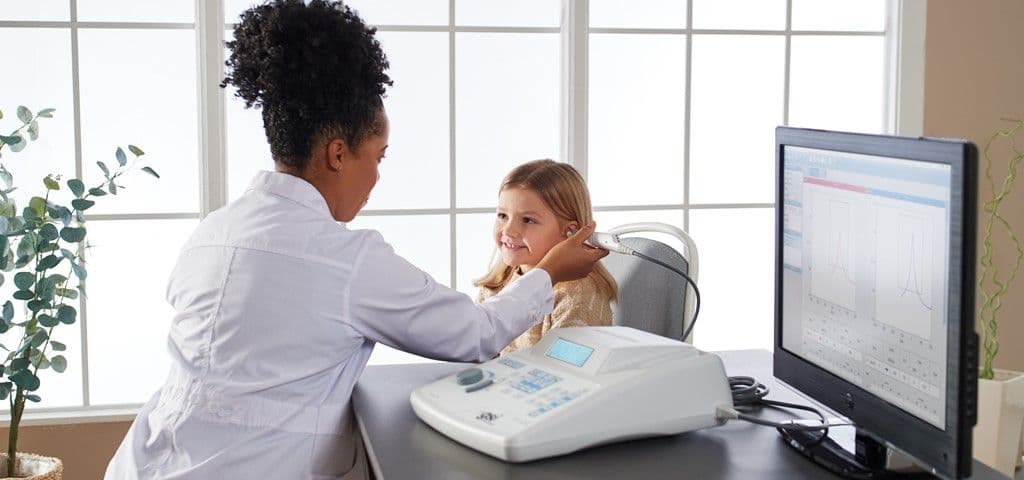
Performing WideBand Tympanometry with the TympStar Pro
WideBand Tympanometry is a cutting-edge middle ear assessment tool available on the TympStar Pro, offering various benefits over single frequency tympanometry. Unlike conventional tympanometry, WideBand Tympanometry utilizes a wideband click stimulus, allowing for a comprehensive evaluation across a broad frequency range. WideBand Tympanometry is available on the latest version of the TympStar Pro with the advanced clinical license.
To determine your version of TympStar Pro, press the configure button on the front panel of the instrument. If you have APP Version 1.x.x, it is not possible to upgrade to WideBand Tympanometry capabilities. If you have APP Version 2.x.x and WideBand is not loaded on the device, it can be added with the advanced clinical license.
Follow the steps below to perform WideBand Tympanometry on the TympStar Pro:
This is the same procedure for obtaining a Tympanogram with a single frequency like 226 Hz.
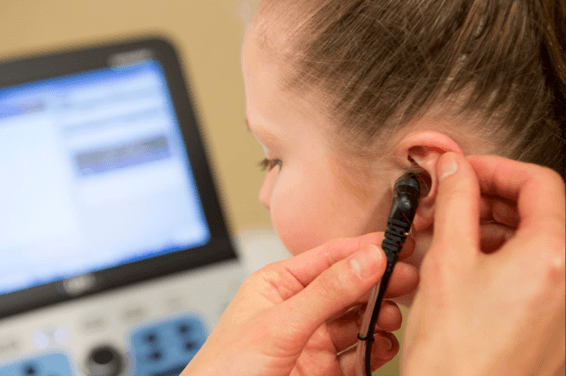
With the TympStar Pro, practitioners can acquire a complete set of tympanometry data in the time it typically takes to perform a single 226 Hz sweep. This efficiency is specifically beneficial when testing infants, as WideBand Tympanometry automatically provides tympanograms at both 226 and 1000 Hz, enhancing diagnostic precision.
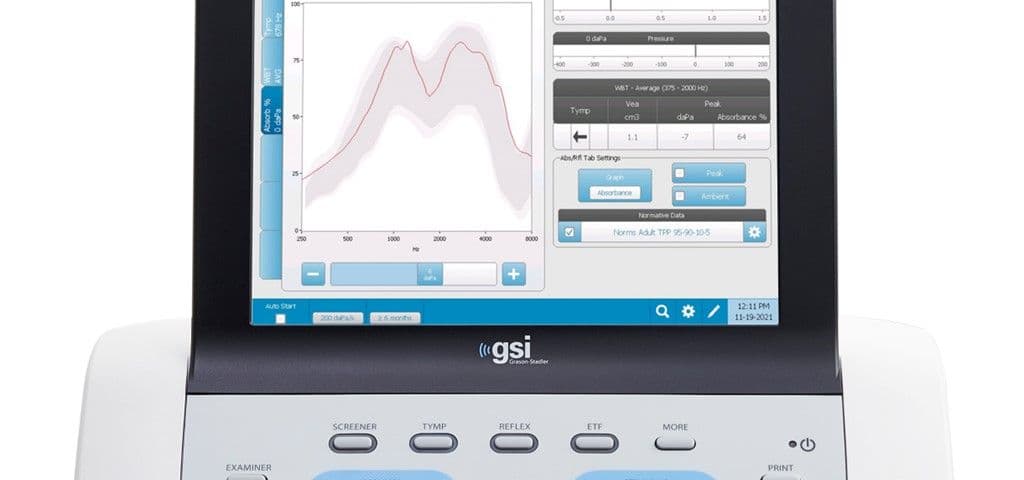
The results generated by WideBand Tympanometry provide invaluable insights into middle ear function. In addition to tympanograms at multiple probe tones, metrics such as Tympanic Peak Pressure (TPP) and Ear Canal Volume (Vea), clinicians gain a thorough understanding of the middle ear status by analyzing the absorbance across the frequency range. The inclusion of age-specific normative absorbance data facilitates easy interpretation and counseling for patients.
One of the standout features of WideBand Tympanometry is the absorbance graph, which visualizes the extent of sound absorption by the middle ear across different frequencies. This graph serves as a crucial diagnostic aid, with distinct patterns indicative of normal function or underlying pathologies such as otosclerosis or middle ear effusion.
Karen received her master’s degree in audiology from Purdue University. She has an extensive clinical background that includes evoked potentials, vestibular assessment and hearing aid fittings. For over 10 years, she has worked in the industry in a variety of roles including customer support for an evoked potential manufacturer and as the Manager of Audiology Education for a large international equipment company. At GSI, Karen divides her time between application support for customers and distributors and product management.