GSI 39
Combined Tympanometry and Audiometry
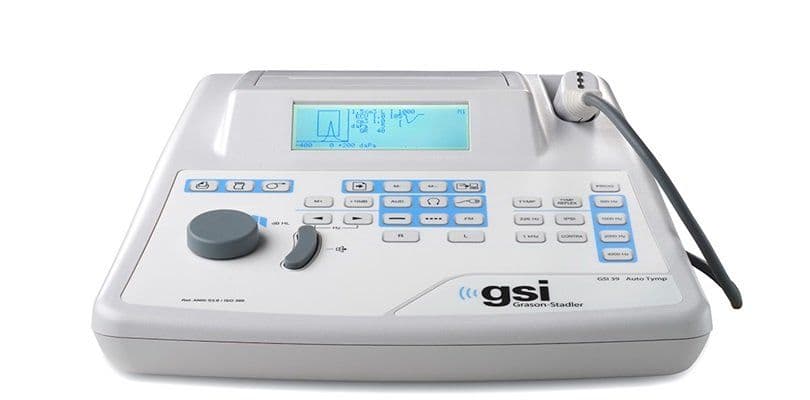
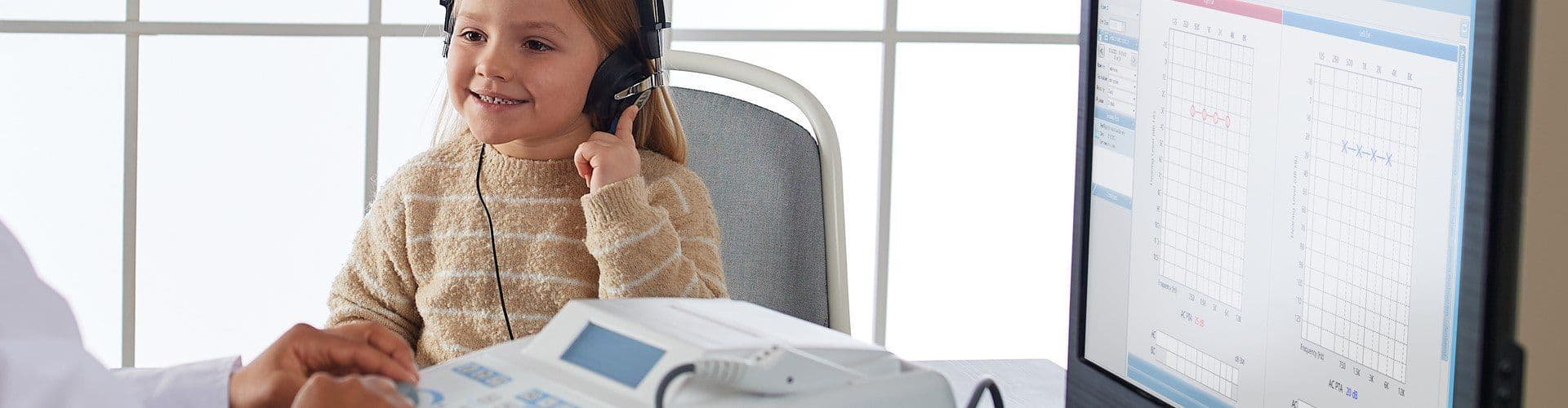
Offering screening tympanometry and audiometry, the GSI 39™ is the perfect fit for hearing screenings in a variety of environments. Available in five versions, the GSI 39 is a flexible screening product for tympanometry, acoustic reflex measurements, and audiometry to meet your hearing screening needs today and in the future. Choose your preferred features today and upgrade your device with additional features as your tympanometry and audiometry needs change in the future.
Request Quote
Frequently Asked Questions
When would you use the pure tone signal modifications, steady, pulsed, and FM on the GSI 39?
These can be used in a number of screening situations. In a school screening environment, the operator can test a distracted child with a variety of interesting test stimuli. In an industrial screening environment, the operator can present a signal that allows the patient to distinguish the signal from “ringing” in the ear.
How does Auto Start operate with the tympanometry module?
The tympanogram will automatically begin recording as soon as the ear canal is sealed with a probe tip. This is a large benefit for the examiner that may need both hands to work with the patient, acting as an assistant.
What type of printing formats are available with the GSI 39?
There is an on-board printer that will print the tests in the order they were obtained. It is possible to add a standard sized printer for direct printing to a regular piece of paper. Additionally, you may transfer the data to GSI Suite on a PC, and print the data on a customized report.
Is 1000 Hz probe tone available on the GSI 39?
Yes, you may add the 1000 Hz probe tone to any version of the GSI 39.
What are the five versions available with the GSI 39?
• Version 1 - tympanometry plus screening ipsilateral acoustic reflex testing
• Version 2 - tympanometry plus ipsilateral and contralateral screening acoustic reflex measurements
• Version 3 - tympanometry plus ipsilateral and contralateral screening acoustic reflex measurements, and screening audiometry
• Version 4 - tympanometry alone plus ipsilateral acoustic reflex screening testing, and screening audiometry
• Version 5 - tympanometry only
Product Specifications
• W x D x H: 12.5 in x 14.5 in x 4.7 in (31.75 cm x 36.83 cm x 11.94 cm)
• Weight: 5 lb – unit and probe (2.27 kg)
• Shipping W x D x H: 19.5 in x 22.5 in x 8.25 in (49.53 cm x 8.86 cm x 20.96 cm)
• Shipping Weight: 13.1 lb (5.94 kg)
PROBE TONE
• Frequency: 226 Hz +⁄- 2%
• Intensity: 85.5 dB SPL +⁄- 2.0 dB
• Harmonic Distortion: < 3%
COMPLIANCE
• Range: 0.0 to 1.5 cm3 and 0.0 to 3.0 cm3
• Accuracy: +⁄- 5% or +⁄- 0.1 cm3, whichever is greater
PRESSURE
• Range: +200 to -400 daPa
• Accuracy: +⁄- 10 daPa or 15%, whichever is greater, measured in 0.5 to 2.0 cc cavities
• Sweep Rate: 600 daPa/sec, except near tympanogram peak where sweep rate slows to 200 daPa/sec to provide better definition of the peak compliance
• Sweep Direction: Positive to negative
• Gradient: Tymp pressure width at 50% of peak compliance
• Test Time: Approximately 1 second
REFLEX
• Frequencies: 500, 1000, 2000, and 4000 Hz
• Accuracy: +⁄- 3%
• Total Harmonic Distortion: < 5% (< 10% at 110 dB HL)
• Rise/ Fall Times: 5 to 10 msec
• Output Levels: 80 - 110 dB HL
• Pressure: Automatically set to pressure at peak compliance with an offset of + or – 20 daPa depending on location of peak compliance
• Test Time: 2 to 12 seconds
226 Hz PROBE TONE
• Frequency: 226 Hz, 1000 Hz +/- 2%
• Intensity: 85.5 dB SPL +⁄- 2.0 dB
• Harmonic Distortion: < 3%
1 Hz PROBE TONE
• Frequency: 1 kHz Hz +⁄- 2%
• Intensity: 75 dB SPL +⁄- 2.0 dB
• Harmonic Distortion: < 3%
COMPIANCE (226 Hz)
• Range: 0.0 to 1.5 cm3 and 0.0 to 3.0 cm3
• Accuracy: +⁄- 5% or +⁄- 0.1 cm3, whichever is greater
ADMITTANCE (1 kHz ONLY)
• Range: 0.0 to 5.0 mmho and 0.0 to 10.0 mmho
• Accuracy: +⁄- 5% or +⁄- 0.3 mmho, whichever is greater
PRESSURE
• Range: +200 to -400 daPa
• Accuracy: +⁄- 10 daPa or 15%, whichever is greater, measured in 0.5 to 2.0 cc cavities
• Sweep Rate: 600 daPa/sec slowing to 200 daPa/ sec near tymp peak - 226 Hz only; 200 daPa/sec - 1 kHz only
• Sweep Direction: Positive to negative
• Gradient: Tymp pressure width at 50% of peak compliance (226 Hz only)
• Test Time: 1 to 3 seconds
REFELX (226 Hz PROBE TONE)
• Frequencies: 500, 1000, 2000, and 4000 Hz
• Accuracy: +⁄- 3%
• Total Harmonic Distortion: <5% (<10% at 110 dB HL)
• Rise/Fall Times: 5 to 10 msec
• Output Levels: 80-110 dB HL
• Step Size: 10 dB
• Pressure: Automatically set to pressure at peak compliance with an offset of + or – 20 daPa depending on location of peak compliance
• Test Time: 2 to 12 seconds
REFELX (1 kHz PROBE TONE)
• Frequencies: 500, 2000, and 4000 Hz
• Accuracy: +⁄- 3%
• Total Harmonic Distortion: <5%
• Rise/Fall Times: 5 to 10 msec
• Output Levels: 80-100 dB HL
• Step Size: 10 dB
• Pressure: Automatically set to ambient pressure (0 daPa) for all tests
FREQUENCIES
• 125, 250, 500, 750, 1000, 1500, 2000, 3000, 4000, 6000, and 8000 Hz
• Accuracy: +⁄- 2%
• Total Harmonic Distortion: < 2.5%
• Rise/Fall Time: 20 to 50 msec
HEARING LEVEL RANGE
• Air Conduction: -10 to 100 dB HL
• Step Size: 5 dB
• Accuracy: 125 to 4000 Hz: +⁄- 3 dB, 6000 to 8000 Hz: +⁄- 5 dB
• Signal to Noise: > 70 dB
TONE PRESENTATION
• Continuous: Steady on when Present bar is depressed
• Pulsed: 2.5/ sec ( 200 msec ON, 200 msec OFF)
• FM (frequency modulated or warble tone): +⁄- 5%, 5 Hz
• 4 inch thermal printer
• Speed: 2 audiograms + 2 tymp/reflex (4 frequencies), < 1 minute
• 240 x 64 graphical, monochrome LCD
• Probe assembly ( Standard - 226 Hz only or Combo - 226 Hz and 1 kHz)
• Power module + power cord
• Test cavity
• Eartips (probe) 6 sizes, 2 each
• Paper – 3 rolls thermal, 4”
• User manual
• Quick reference guide
• Wall chart – 226 Hz
• Eartips (contra), 8 sizes, 4 ea.; versions 2 and 3
• Contra phone; versions 2 and 3
• DD 45 headset; versions 3 and 4
• Eartips (8mm, 25 ea.); combo probe only
• Probe shoulder mount; combo probe only
• Probe cleaning kit; combo probe only
• GSI Suite
• Operating Temperature: +59° F (15° C) to +104° F (40° C)
• Storage Temperature: -93° F (-69° C) to +149° F (65° C)
• Operating Humidity: 15% to 95%
• Operating Ambient Pressure: 98 kPa to 104 kPa
• Universal, auto-ranging power supply: 100 to 240V +⁄- 10%; 50 to 60 Hz +⁄- 5 %; 16 W maximum while printing
Manufactured, designed, developed, and marketed under ISO 13485 certified quality systems.
• IEC/EN 60601-1 Medical Electrical Equipment Requirements for Safety
• CSA C22.2 No.601-1-M90
• ANSI S3.39 Aural Acoustic Impedance Admittance (Type 3)
• IEC 60645-5 Aural Acoustic Impedance/ Admittance (Type 3)
• ANSI S3.6 Audiometers (Type 4)
• IEC 60645-1 Pure Tone Audiometers (Type 4) Specifications for Audiometers (Type 4)
• PTB Certificate No. 15.11-94/53 Pure Tone Audiometers (Type 4)
• GL2005-00014 Guidelines for Manual Pure-Tone Threshold Audiometry

Multiple Configurations
Accommodate a variety of testing needs with five versions. Combine tympanometry, ipsi and contra reflex screening, and screening audiometry to quickly assess middle ear function, neural integrity, and hearing level in patients of all ages. Upgrade your GSI 39 at any time for more functionality.

Reliability You Can Trust
GSI has a history of manufacturing products that are designed for durability and ease of use. Enjoy the flexibility of a portable, stand-alone device that can perform combination tympanometry and audiometry screenings. Use the internal printer to run reports or connect to a PC for a seamless EMR/EHR transfer.

Testing Takes Seconds
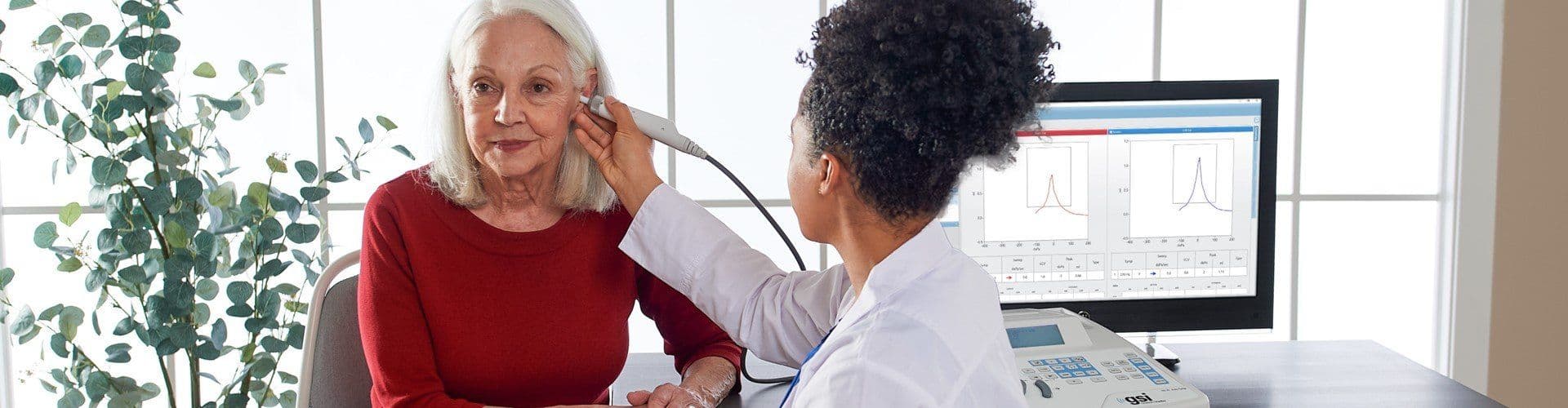
As soon as the probe tip obtains a seal in the ear canal, the tympanogram will automatically begin. Pressure sweep is 600/200 daPa per second, which provides a fast and accurate picture of the middle ear function. It’s a perfect device for a busy audiology clinic or ENT office that needs to test patients quickly and accurately.
Two Screening Options
A special “combo” probe is an available option with all versions that combines both 226 Hz and 1000 Hz measurement capabilities. Both infant and adult normative ranges may be selected as a guide on the display and printouts.
Key Device Features
1. Multiple Probe Tones
Probe tones of 226 Hz and 1000 Hz are available. Normative ranges for middle ear pressure and admittance are included.
2. Screening Audiometry
Pure tone air conduction screening from 125 to 8000 Hz. Steady, Pulsed, and FM provide a variety of interesting test stimuli to accommodate all screening environments.
3. Five Versions Available
Flexible options that include tympanometry at 226 Hz, 1000 Hz, ipsilateral and contralateral reflex screening, and audiometry in any combination.
4. Ipsi and Contra Reflex Screening
Quickly screen for the presence of ipsilateral or contralateral acoustic reflexes at up to four frequencies.
5. Stand-Alone, PC Enabled
Have the reliability of a stand-alone device with the ability to be EMR/EHR compatible. A single button press transfers tympanometric and audiologic data for advanced reporting options.
6. Printing Options
Use the on-board printer on the combined screening tympanometer and audiometer or connect to GSI Suite to print results from a PC.
Featured Videos
PRODUCT TUTORIAL
Getting Started with Testing
PRODUCT TUTORIAL
Tympanometry Overview
PRODUCT TUTORIAL
Audiometry Overview
New Tutorial Video
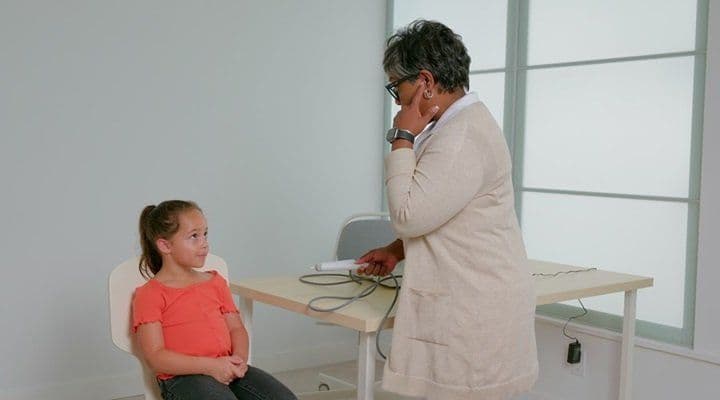
Follow the link to access the new GSI 39 tutorial, along with other training materials. Topics covered include:
- Getting Started with Testing
- Probe Types
- Tympanometry and Audiometry Testing
- Reporting Options
EMR Made Easy
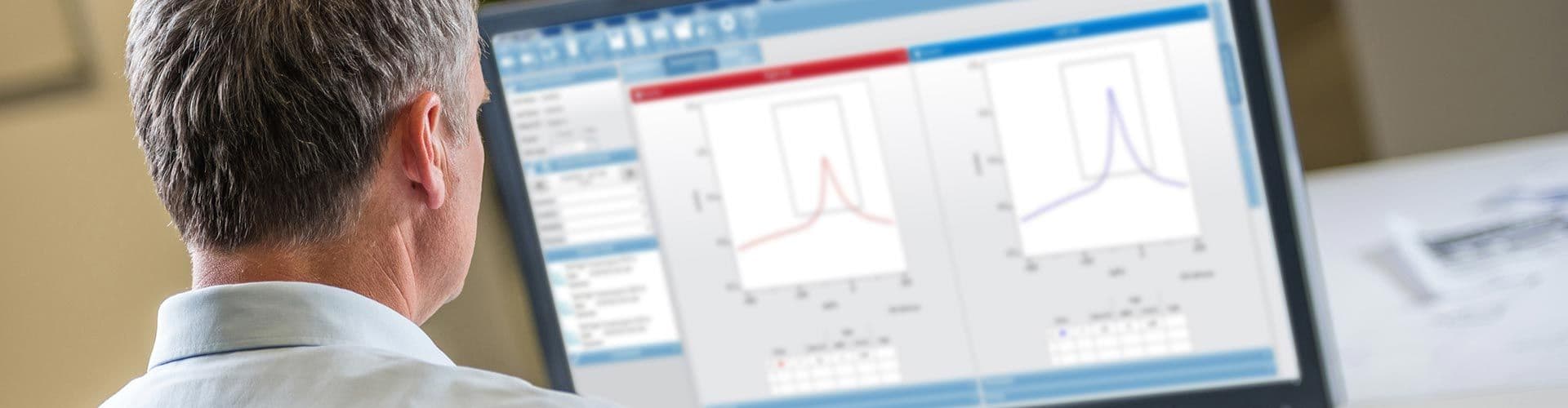
With one button press, test results are transferred from the GSI 39 to GSI Suite software where audiometric, tympanometric, and OAE test results may be combined into a single comprehensive report. Easy-to-interpret counseling overlays such as the speech banana or hearing loss levels assist the clinician with explaining the results to the patient and family members.
Next Steps
Learn more by checking out our materials below or clicking the distributor locator button.